Key Takeaways
- Sort items by use before packing them away.
- Clean and dry belongings to avoid storing dirt, moisture, and odors.
- Use clear labels, photos, and a basic inventory to reduce searching.
- Keep next season’s items where they can be easily reached.
- Review insurance details before placing valuable property in storage.
- Schedule two seasonal swaps each year to keep the system up to date.
Seasonal storage can make a Petaluma home feel more functional without asking a household to give up useful belongings. Whether the overflow is holiday décor, rain gear, patio cushions, gardening tools, school supplies, or camping equipment, a simple rotation system helps keep each category accessible when its season returns. For homeowners and renters considering storage insurance Petaluma options, Petaluma Self Storage is a local self-storage facility serving Petaluma and nearby Sonoma County communities. Its experience providing storage units, controlled access, on-site management, and security-focused storage practices makes it a practical local reference when planning how to store personal property responsibly.
The goal is not to create a picture-perfect storeroom. It is to create a repeatable system that lets you find what you own, protect items while they are put away, and reclaim valuable room in closets, garages, and spare bedrooms. A little preparation before each seasonal change can prevent a much larger decluttering project later.
Why Seasonal Storage Gets Disorganized
Storage becomes difficult when every spare box turns into a catchall. One container may hold Halloween lights, beach towels, tax papers, and an old phone charger simply because those items were nearby when someone started packing. Months later, the box is too vague to be useful, and the same household may buy duplicates because the original item cannot be found.
In Petaluma, changing routines can quickly create piles. Cooler, wetter months may bring boots, heavier bedding, umbrellas, and indoor hobbies to the front of the house, while sunnier stretches call for outdoor furniture, garden supplies, and recreation gear. Assigning a place for each category is more effective than treating the garage or storage unit as a place where everything disappears.
Step One: Sort Before You Pack
Begin every seasonal swap with four simple groups. This keeps storage from becoming a delayed decision.
- Use Soon: Keep current-season items at home and easy to reach.
- Store: Pack items that are unlikely to be needed for several months.
- Donate or Sell: Set aside usable belongings that no longer fit your household.
- Recycle or Discard: Remove broken, unsafe, stained, or unusable items.
Ask a few honest questions as you sort: Did we use this last season? Is it likely to be used again? Would it cost more to replace than to store? Does it carry meaningful family value? The answers help distinguish useful seasonal belongings from clutter that has simply been postponed.
Step Two: Group Belongings by Season and Activity
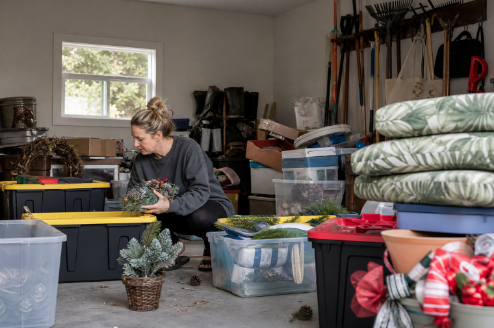
Pack broad categories together so an entire activity can move in or out at once. Useful groups may include winter clothing and blankets, holiday decorations, gardening supplies, camping gear, patio items, youth sports equipment, and materials for a small business or community event.
Keep Related Items Together
A “summer patio” group might include cushion covers, outdoor string lights, a tablecloth, and citronella holders. A “fall garden” group could include gloves, hand tools, seed packets, and plant supports. Grouping by activity is easier to maintain than a box labeled “miscellaneous,” and it makes the next swap much faster.
Step Three: Clean and Prepare Every Item
Long-term storage starts with clean, dry belongings. Wash and fully dry clothing, linens, and soft goods. Brush soil and grass from outdoor equipment, wipe down hard surfaces, and allow damp tents or patio items to air out completely. Remove batteries from devices that will sit unused for months, and follow the manufacturer’s instructions for fuel-powered equipment.
Moisture, food residue, and trapped odors can cause problems over time. For paper records, photographs, collectibles, and family keepsakes, use protective sleeves or boxes and keep them elevated rather than directly on the floor. It is also wise to keep irreplaceable documents at home in a secure, accessible place instead of treating them as ordinary storage items.
Step Four: Use Containers That Fit the Job
- Choose sturdy plastic bins for clothing, décor, and supplies that need added protection.
- Use wardrobe boxes for garments that wrinkle easily.
- Use divided or padded containers for ornaments, glassware, mirrors, and fragile décor.
- Keep heavy items in smaller containers that can be lifted safely.
- Cover furniture and fabric pieces with breathable materials rather than sealing them tightly in plastic.
Cardboard can be useful for short-term packing, but it is less durable when boxes are stacked, moved repeatedly, or exposed to damp conditions. Whatever container you choose, do not overfill it. A container that is too heavy or bulging is harder to move and more likely to fail.
Step Five: Create Labels and a Simple Inventory
Every container should have a category, season, and box number. Write the main contents on the top and at least one side, then take a quick photo before closing it. A phone note or spreadsheet can list the box number and its location.
FALL-03 | Halloween décor | lights, wreaths, table pieces
Photographing possessions and recording basic details can also make it easier to document what you own for insurance purposes, especially for higher-value belongings.
Step Six: Arrange Storage for Access, Not Just Capacity
Put next-season items near the front of the garage, closet, or unit. Store heavy containers on lower shelves, place frequently used boxes around waist height when possible, and leave a narrow walkway for inspection and retrieval. Emergency supplies, important papers, and often-used tools should never be buried behind holiday bins.
Think of the space in two zones. Rotation storage holds belongings you expect to retrieve once or twice a year. Long-term storage holds items that may remain packed for years. Rotation items deserve the most convenient locations, while long-term items can sit farther back if they are still protected and labeled.
Insurance and Items That Need Extra Care
A storage facility’s security features and your insurance coverage are separate considerations. Before storing valuables, review your homeowners or renters policy and ask about off-premises coverage, deductibles, exclusions, and limits for categories such as jewelry, art, electronics, or collectibles. Take photos, keep receipts or appraisals when available, and avoid assuming every type of damage is covered.
For belongings sensitive to moisture or water exposure, elevate containers on shelving or pallets where appropriate and keep them away from obvious risk areas. Federal preparedness guidance on moving valuables to higher levels also reinforces the value of protecting important property and records from water-related hazards.
A Twice-Yearly Storage Routine
- Choose a spring-to-summer date and a fall-to-winter date.
- Bring out the containers for the incoming season first.
- Inspect, clean, and repair items before using them.
- Pack the outgoing season using the same category labels.
- Update photos, the inventory list, and the storage map.
- Donate, sell, recycle, or discard items that no longer serve a purpose.
Quick Checklist for a Better Storage System
- Sort before packing.
- Clean and dry every item.
- Use containers suited to the contents.
- Label every box clearly.
- Create a photo inventory.
- Keep the next season near the front.
- Leave room to walk, inspect, and retrieve boxes.
- Review insurance and document valuable property.
- Set reminders for the next seasonal swap.
Conclusion
A seasonal storage system does not have to be complicated to work well. In Petaluma, a few organized storage habits can make room for everyday life while keeping seasonal belongings ready for their next use. Sort carefully, prepare items before packing, label consistently, and revisit the system twice a year. The result is less searching, fewer duplicate purchases, and a home that is easier to enjoy in every season.